

Choosing The Right Storage Baskets & Bins
Storage bins and baskets are invaluable tools for keeping your home organized and clutter-free. However, not all bins and baskets are created equal and choosing the wrong one can be the downfall of your system. To ensure you set yourself up for long-term success, here are six key factors to guide your basket and bin decision-making process.
An Important Organizing Reminder

There’s one thing to remember when it comes to purchasing any organizing products: only do it AFTER you’ve decluttered, created your categories, decided where each category is going to be stored, and measured everything. O.K., now to the six factors.
#1: Sturdiness
Durability is crucial for storage bins and baskets, especially if they will hold heavy or frequently used items. Generally, plastic, acrylic, bamboo, rattan and metal are the sturdiest options, but there are some excellent sturdy fabric bins as well, such as the Ikea Drono and Decomomo bins (affiliate link).
#2: Straight Sides

Straight-sided bins maximize storage capacity by eliminating wasted space caused by slanted walls. The above image from Apartment Therapy provides a great visual of the space you lose when using slanted bins, both on the shelf and in the bin itself.
#3: Material
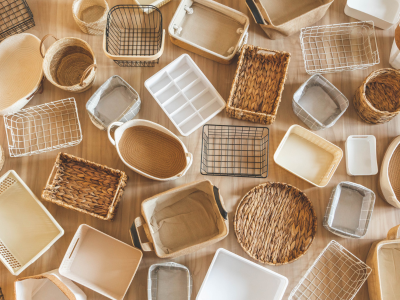
The material of your bin should be determined by what it will be storing AND where you will be storing it. Below is a non-exhaustive summary:
Plastic Bins/Baskets are durable, water-resistant and easy to wipe/clean, making them ideal for heavier items, items that get accessed regularly/multiple times a day, in basements and garages, under sinks, in bathrooms, and for pantry items that can spill or create crumbs.
Fabric Bins/Baskets are lightweight, soft, and foldable, making them great for storing clothes, blankets, linens, towels, and toys.
Natural Fiber Bins/Baskets such as seagrass are generally sturdy, but should not store items that are heavily scented, that may spill liquid or crumbs, that clothing fibres may catch on or where there is a chance of moisture.
#4: Size
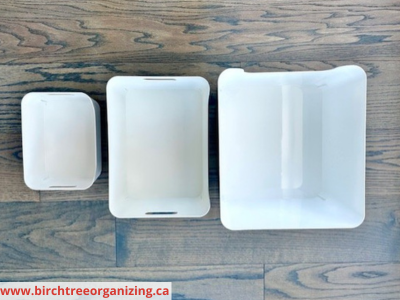
Size DOES matter when it comes to baskets and bins. If a basket is too large, it increases the chances that unrelated items will get tossed in. If it’s too small, everything won’t fit, and there will be overflow.
In both cases, you lose the key benefit of “like with like,” and the system will break down. It’s best to aim for a basket that leaves a little room to grow to account for inevitable fluctuations.
Lastly, on shelves and in cupboards, you want to use a bin that maximizes the depth so there is no “dead” space behind it.
#5: Opaque or Transparent
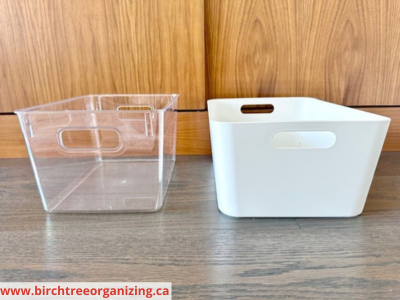
The choice between opaque and transparent bins depends on your preference for visibility.
Transparent bins allow you to easily see contents without opening them and/or reaching into them, which is ideal for frequently accessed items or if you are an “out of sight, out of mind” person.
Opaque bins provide a cleaner look and better hide clutter in living spaces. If you’re using opaque bins, I strongly recommend labeling them to avoid confusion when searching for items.
#6: Lid or No Lid
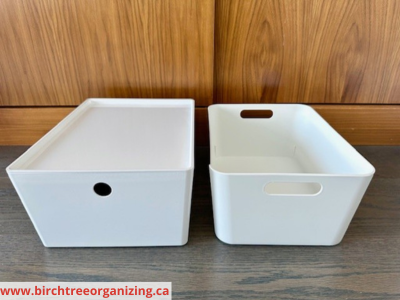
The last consideration is whether you want to use a bin with a lid. I suggest avoiding lids for everyday items like toys, pre-packaged pantry items, laundry supplies, crafts etc.
It seems small, but the extra step of removing a lid to put an item away is the downfall of many systems. Lids increase the chances you’ll set an item beside or on top of the container to be properly dealt with later, which doesn’t always happen until a pile has formed on top, creating more clutter.
That said, lidded bins you can stack are the best choice for contents that need to be protected from dust or moisture, for less frequently accessed items such as seasonal décor, and when you need them to maximize the vertical space available.
BONUS Consideration: Aesthetic
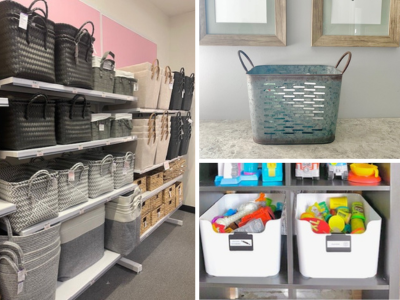
While the six functional considerations discussed above are the most important, selecting products you like the appearance of can provide extra motivation to follow and maintain the systems you set up. So, try to find something that meets the functional criteria AND matches your style/aesthetic.
What if I Can’t Find a Bin that Meets ALL the Criteria?
Unfortunately, you aren’t always going to find bins that meet all the 6 criteria perfectly. When this happens, you have to determine what factors are most important.
For example, sturdiness is the most important factor when the bin is storing heavier items. Depth is the most important factor when the bin is going into a deep cabinet. If the bin has a slight taper but everything else is right about it, the slight taper doesn’t matter. You get the idea!
Conclusion:
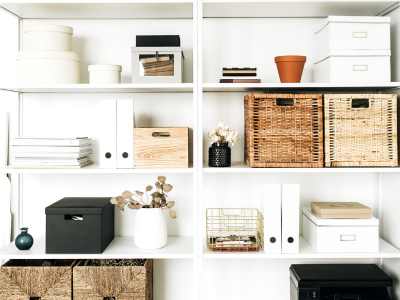
By considering these six factors—sturdiness, straight sides, material, size, visibility, and lid options—you’ll find functional, tailored, and lasting storage solutions. For basket storage inspiration, check out this post that shares 20 ways to get organized with baskets.
Do you have a favourite type of bin you use? Let me know in the comments below. And if you liked this post, please share it!
Happy organizing!

0 comments