

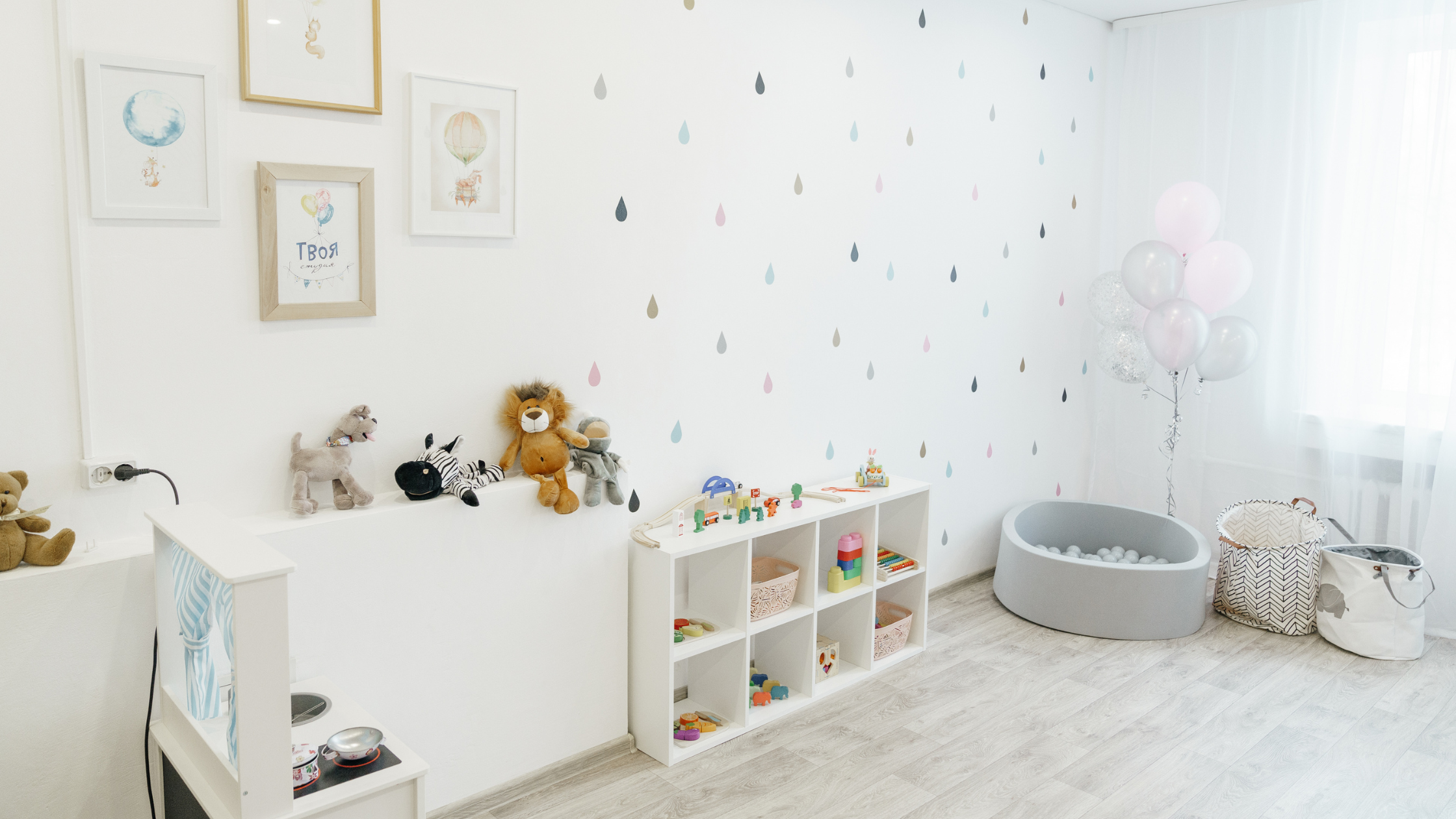
How To Curb Toy Chaos With a Toy Rotation
One of the most common items clients tell me they feel overwhelmed by in their homes is toys. If toys are a pain point for you too, read on for tips on curbing the toy chaos by setting up a toy rotation.
Overwhelmed By Toys?
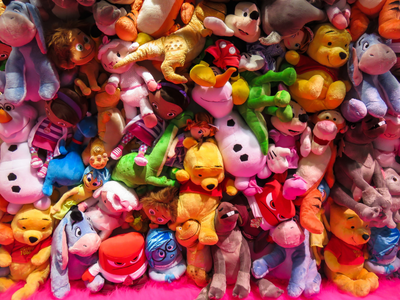
A 2010 study found the average middle-class home always has 139 toys visible and accessible to children, most often in shared family spaces. It’s no wonder we’re feeling overwhelmed!
If fully developed adult minds are overwhelmed by the number of toys to maintain and manage, I promise you, the still-developing minds of kids are overwhelmed too. A toy rotation is a great way to combat this while keeping playtime fresh and interesting for your kids.
What Is A Toy Rotation System?

A toy rotation involves making a limited number of toys accessible to your children to play with at one time and storing the rest of the toys away to rotate in and out. It’s a way to reduce the overwhelm caused by toys but still make play exciting for your kids. But the benefits don’t end there.
Why Less is More When it Comes to Toys

Research has found that kids in environments with fewer, higher-quality toys tend to display increased focus, imagination, and creativity, as well as better perception, cognition, and motor coordination. Having fewer toy distractions also positively affects the development of attention skills, which impact problem-solving, sequencing, and communication.
Additionally, children with fewer toys tend to experience less overwhelm and develop better interpersonal relationships, collaboration skills, and resourcefulness. Last but certainly not least, fewer toys make it faster and easier to manage and maintain their space, which helps kids develop organization skills!
How To Set Up A Toy Rotation
There’s lots of advice available about what a toy rotation should look like. But spoiler alert: there’s no universal answer.
The most important thing to remember is that the best toy rotation system is the one you’ll follow! It’s about finding what works best for you, your space and your kids, regardless of what the book or article you read said.
Finding what that is can take some trial and error, which is just part of the process. The toy rotation fundamentals below are to help you create a simple and sustainable system that will work for you. So, let’s get to them!
1) Gather all the toys in one place:
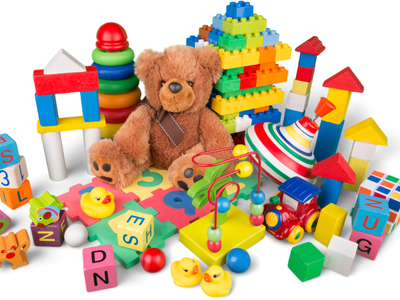
Gather all the toys in a central location so you know what you’re dealing with.
2) Sort, categorize & edit:

Sort all books, vehicles, puzzles, building items, etc. together. Then, create your categories. Above is a non-exhaustive list of potential categories but create categories that make sense to you!
3) Determine how many toys in a rotation & which toys go together:
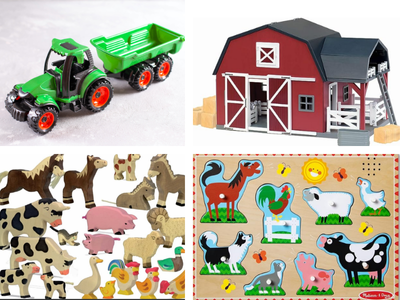
The common general range of toys to keep out is anywhere from 4 to 20. To see what works for you, consider the number of children, the ages of the kids (one and four year olds have different play needs), and the size of your space. Again, don’t worry if it takes a few attempts to find the right balance for your family.
When creating the toy rotation combinations, think about toys from different categories that go well together. For example, have the farm puzzles out at the same time as the farm vehicles and farm animals and the train conductor hat at the same time as the toy train.
You’ll also want to consider how kids will play with the different categories together and look for opportunities to encourage creative cross-play. For example, you might include a family of small figurines in a rotation set alongside building blocks or put a tea set with dolls.
4) Decide on Your Rotation Storage:
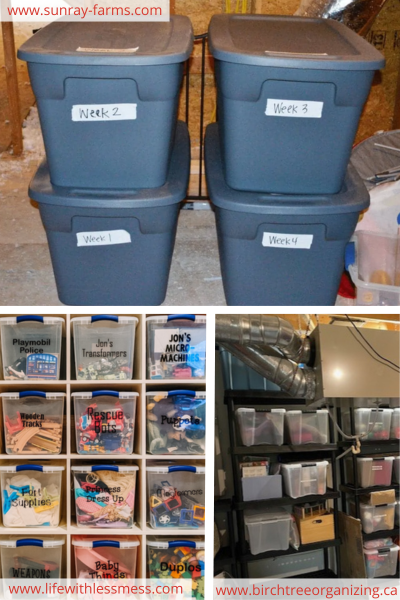
First, you must decide how to store toys when not used. One option is by category, where each category has a bin allowing you to mix up rotations. Another option is by rotation group, where all the toys in a rotation are stored together in a large bin or bins.
One is not better than the other, and your decision may be impacted by how many toys you want out at once and your available storage space.
Then, you must also decide where to store toys that are not in play. Common places are a closet, an attic, a garage or a basement (just make sure they are in a securely sealed bin). Whichever “how” and “where” you choose, the key is to make sure the toys are out of sight and not accessible to the kids.
5) Set up a rotation schedule:
Schedules can be weekly, bi-weekly, monthly or simply when you notice the kids getting bored with the current rotation. Above is an example of a weekly toy rotation, but it’s ok if yours looks different!
What About Large Toys & Current Favourites?
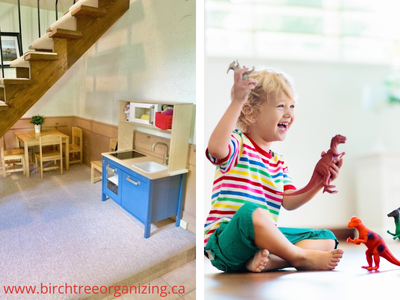
It’s tricky to rotate large toys like play kitchens and doll houses. Instead, rotate the related accessories. For example, different food sets for the kitchen and different peg people or figures for the doll house.
Because toys like this are so open-ended and form the basis for all kinds of play, rotation isn’t necessary to keep things fresh for the kids.
Finally, if there are toys your kids love playing with daily, keep them out longer. The whole point is to keep your kids interested in the toys available. You can switch the toys out when new favourites emerge.
Conclusion
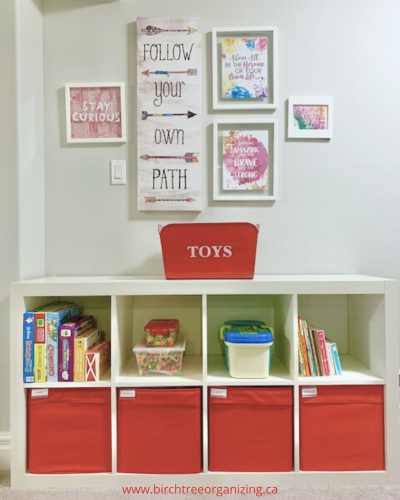
Less really is more when it comes to toys! Less overwhelm (for both you and your kids), more engaged play, plus all the social, cognitive and developmental benefits for kids. Follow these five steps to set-up the best toy rotation system for you and say good-bye to toy chaos forever.
Do you think a toy rotation could work for you? Let me know in the comments below. And be sure to come back next month when I’ll be sharing some of my favourite products to create organized playrooms.
Happy organizing!

0 comments